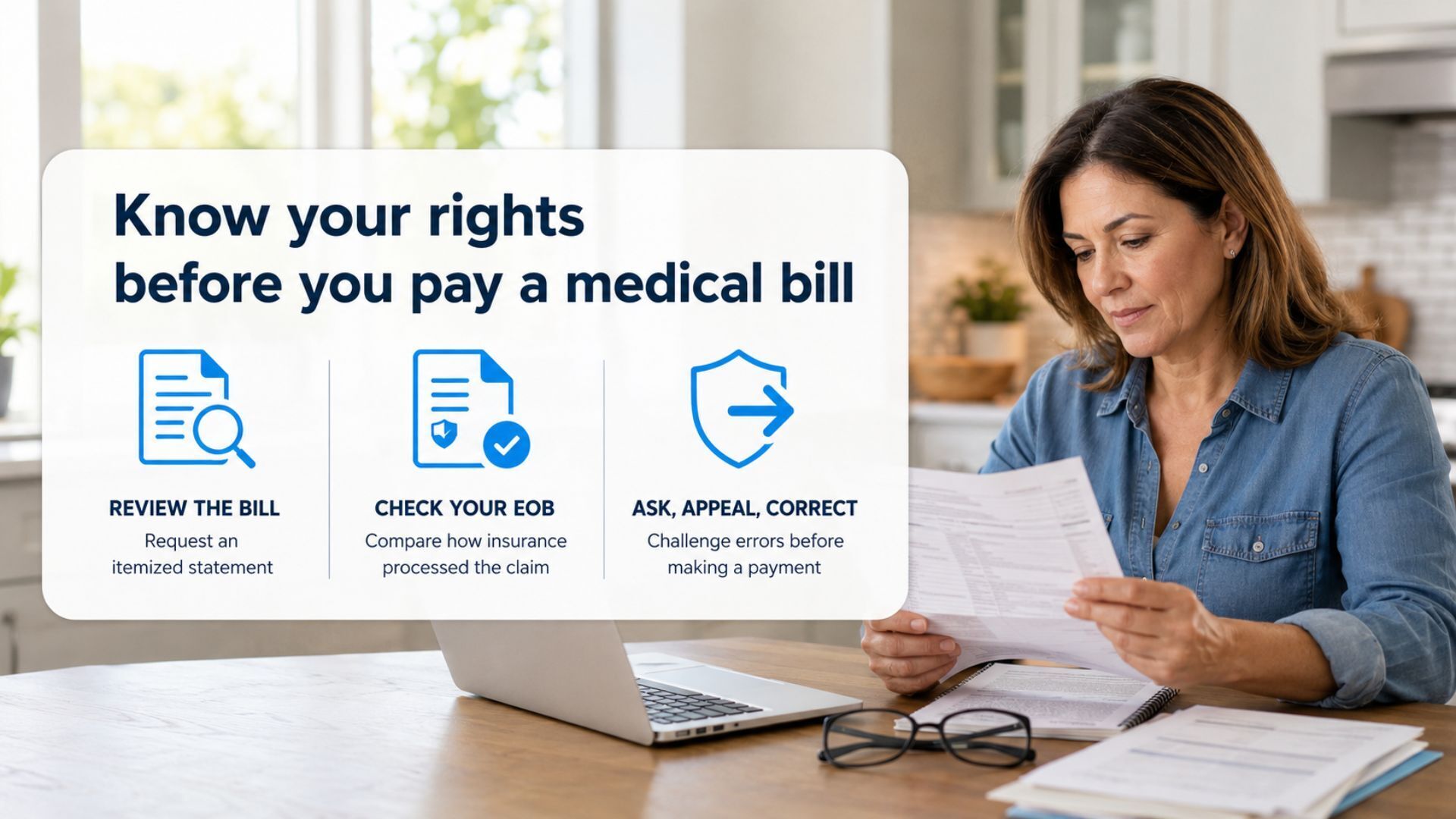
A simple interactive guide for U.S. patients to understand medical bills, review insurance information, ask for corrections, appeal denials, and seek help before making a payment.
You open the mailbox, email, or patient portal and see a medical bill you were not expecting.
Maybe the amount looks too high. Maybe your insurance paid less than you thought it would. Maybe you do not even understand what the bill is for.
Before you panic or pay right away, take a moment. Patients in the U.S. have important rights when it comes to medical billing.
You can ask questions. You can request details. You can challenge errors. And in some cases, you can appeal or dispute what happened.

Start here: what happened?
Select the situation that feels closest to yours. The page will suggest what to review first.
Start with one simple rule
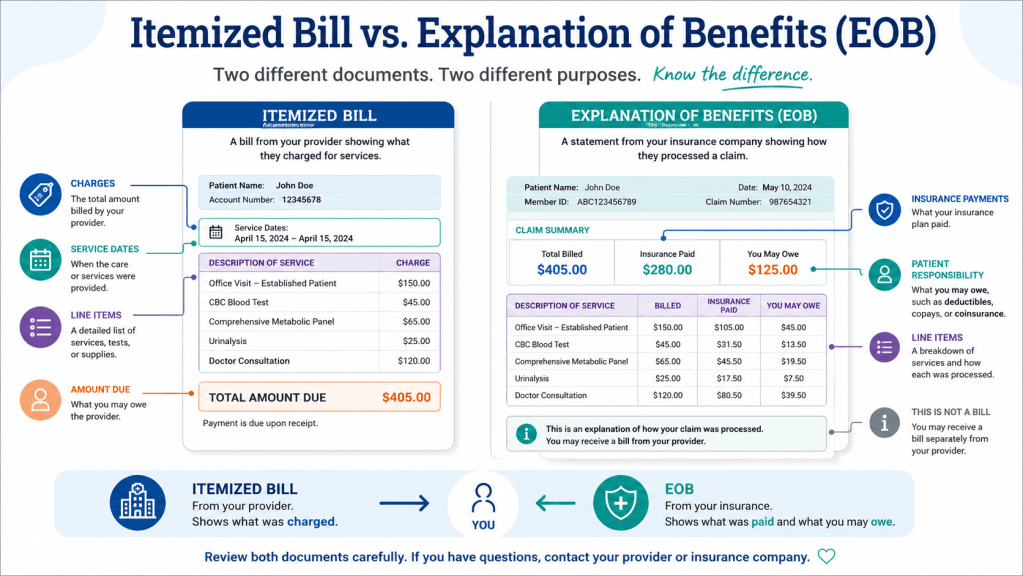
The first right most patients should use is the right to ask for a clear explanation. If the bill looks unclear, ask the provider for an itemized bill. That gives you a detailed breakdown of charges instead of only a total amount.
You should also compare the bill with your Explanation of Benefits, often called an EOB. The EOB comes from your insurance company and shows how the claim was processed.
Questions you can copy before calling
Use these patient-friendly questions when you call the billing office or insurance company.
Itemized bill vs. Explanation of Benefits
These two documents are related, but they are not the same. One comes from your provider. The other comes from your insurance company.
Quick check: bill or EOB?
Tap each question to reveal the answer.
Which document shows what the provider charged?
Which document shows how insurance processed the claim?
Which document should I use before paying?
Four patient rights that matter most
Patients often feel stuck when they see a bill, but you have more options than you may think. In many situations, these are the most practical rights to use first.
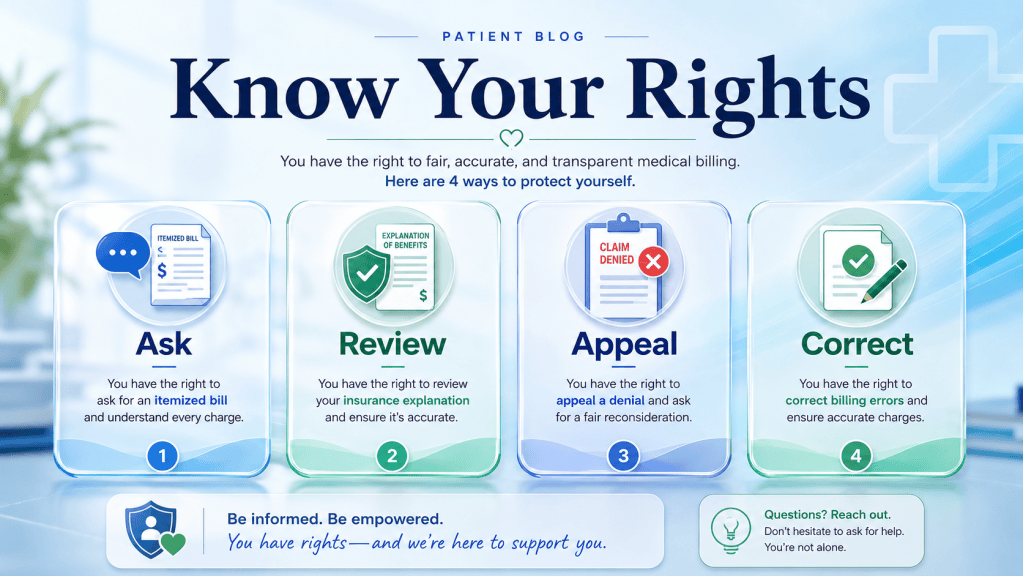
Tap each right to learn more
Know when surprise billing protections may apply
Many patients worry about getting charged for care they did not expect to be out of network. Federal surprise billing protections may apply in certain situations, especially for emergency care and some care delivered at in-network facilities.
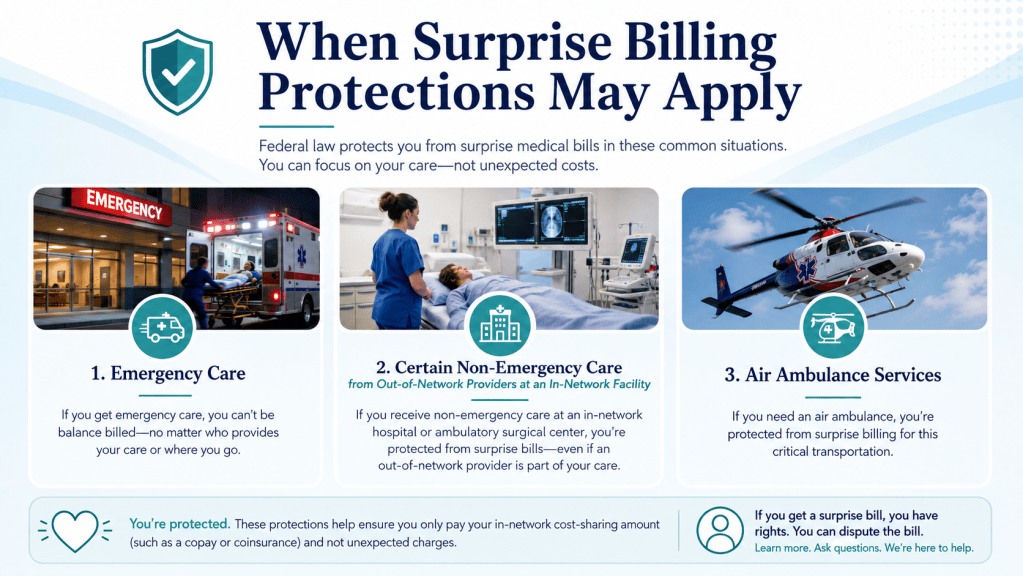
If you receive a bill that seems unexpected, ask the provider and insurer whether surprise billing protections apply to your case.
What if the claim was denied or the bill looks wrong?
A denied claim or high balance does not always mean the story is over. Sometimes the problem is a missing document, incorrect coding, wrong insurance details, a duplicate charge, or a service that was billed incorrectly.
That is why it is important to ask questions before paying. If something appears wrong, you can ask the provider to review the bill, correct errors, or resubmit information. If the insurer denied payment, you may also have appeal rights.
Ask about payment plans and financial assistance
If the bill is real but hard to afford, you still have options. Many hospitals and healthcare organizations offer payment plans, charity care, or financial assistance programs.
Do not wait until the balance becomes overwhelming. Ask early whether help is available.

Save copies of letters, portal messages, and bills in one place.
Before you pay a medical bill
Use this quick checklist before sending payment.
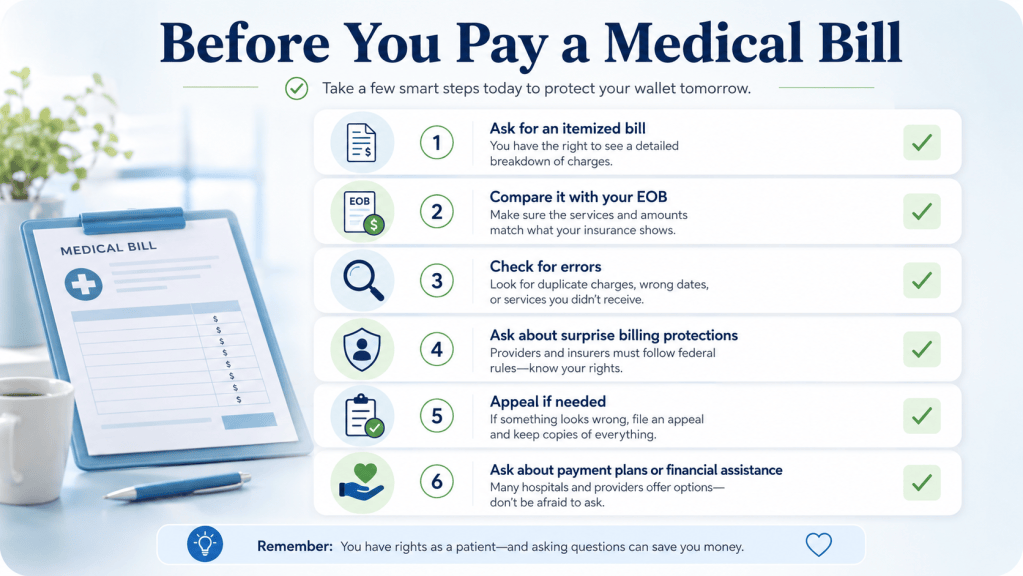
Interactive payment-readiness check
Mark each item you have completed. This helps you slow down before paying.
0 of 5 steps completed.
Final reminder
A medical bill can feel stressful, especially when it arrives unexpectedly. But you do not have to deal with it blindly.
You have the right to understand the bill, review your insurance information, ask for corrections, appeal when appropriate, and seek help if the amount is unaffordable.
How RCMGen helps
RCMGen helps healthcare organizations improve eligibility review, documentation quality, billing accuracy, denial prevention, patient communication, and billing support processes.
Better information and cleaner workflows can lead to a better financial experience for patients and fewer avoidable billing problems.