A practical guide to help patients ask the right questions before planned care and reduce the risk of delays, denied claims, and unexpected medical bills.
Your doctor recommends an MRI. You book the appointment, take time away from work, complete the scan, and assume everything is handled. Then the bill arrives. Your insurance company says the scan was not approved in advance.
For many patients, this is the confusing part. If the doctor ordered the test and the facility scheduled it, it feels reasonable to think the insurance approval was already completed.
But scheduling an appointment and getting insurance approval are not the same thing.
A few checks before treatment can help you avoid delays, denied claims, and unexpected medical bills.

What prior authorization means
Prior authorization is approval from your health plan that may be required before you receive a service or fill a prescription. Without it, your plan may deny payment for the service.
Your doctor may believe the care is medically necessary. Your health plan may still ask for records, test results, or other details before it agrees to cover the service.
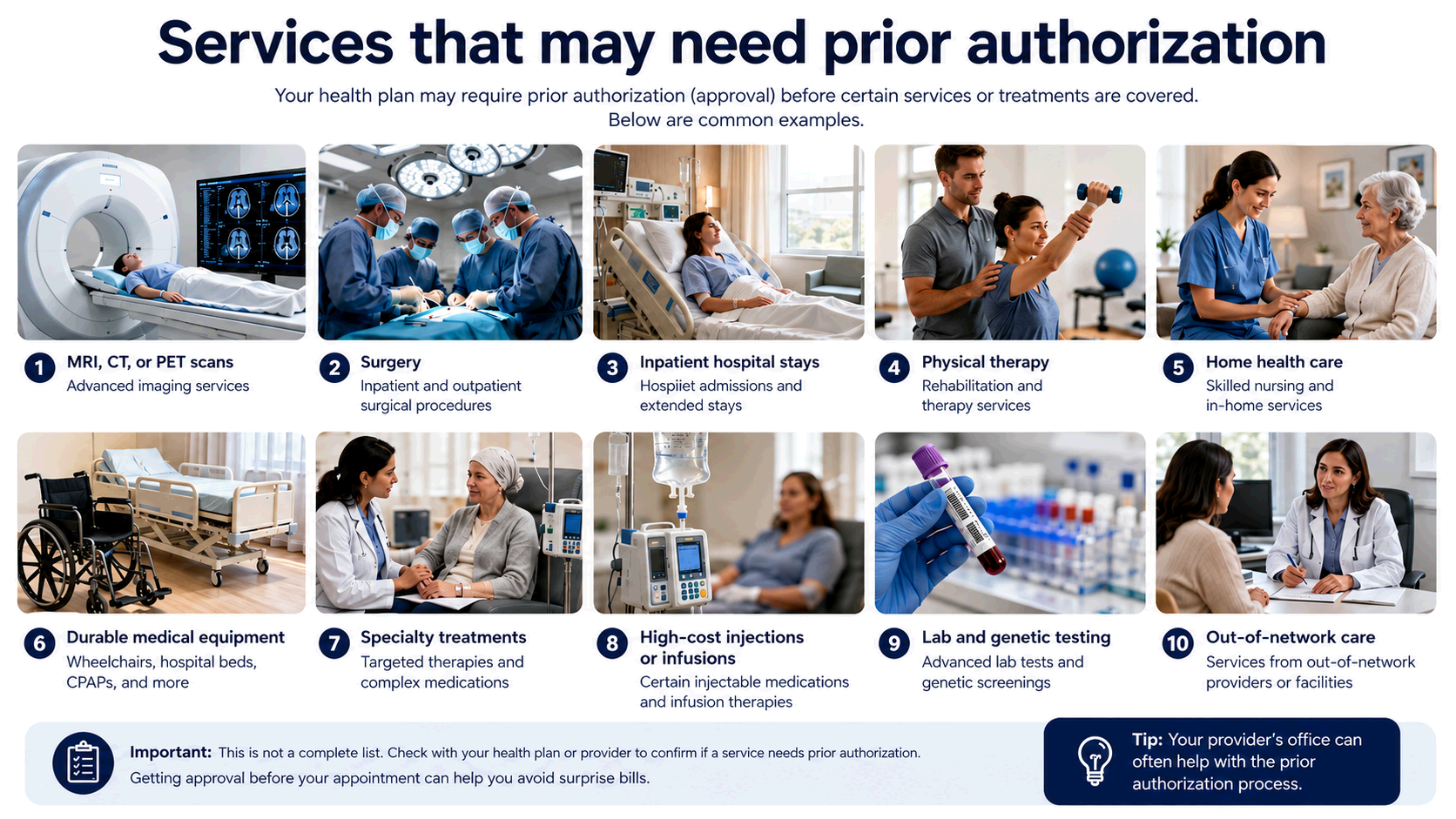
My doctor ordered it. Is that enough?
Not always.
A doctor’s order means your doctor recommends the service. It does not always mean your insurance company has approved the service.
The authorization request may be handled by the doctor’s office, hospital, imaging center, specialist, or another team. Delays happen when each office thinks someone else is taking care of it.
Three questions to ask before treatment
You do not need to understand every insurance rule. Start by asking who is responsible for the authorization, whether it has been approved, and what exactly was approved.

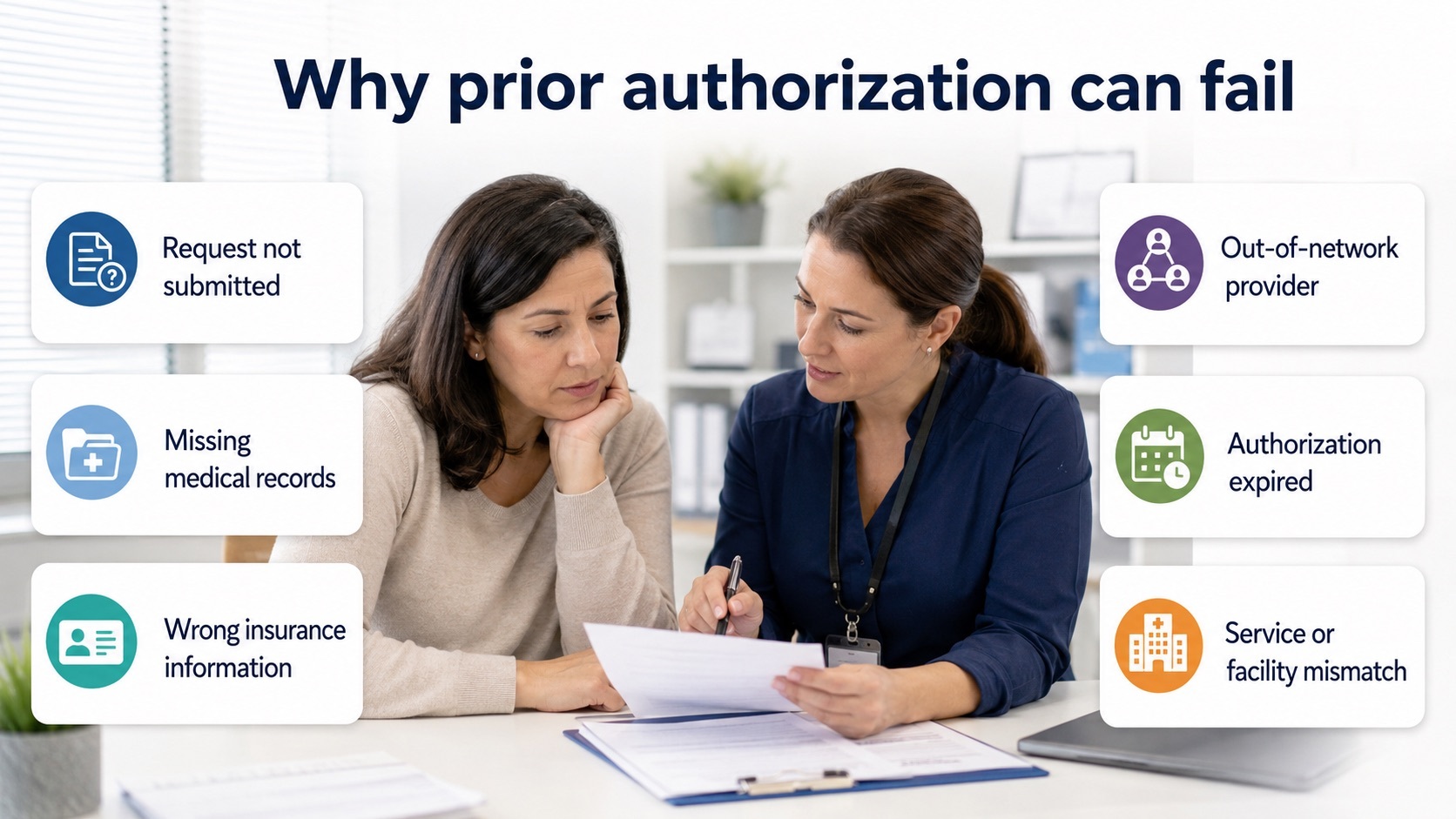
Why prior authorization can fail
Some requests are denied because the health plan says its medical criteria were not met. Others fail because of paperwork, missing records, or communication gaps.
Small details matter. An approval for one imaging center may not apply if your appointment moves to another location. When your doctor, facility, appointment date, or treatment plan changes, ask whether the authorization also needs to be updated.
Your one-minute prior authorization checklist
Before planned care, review this quick checklist and keep the authorization information with your appointment details.
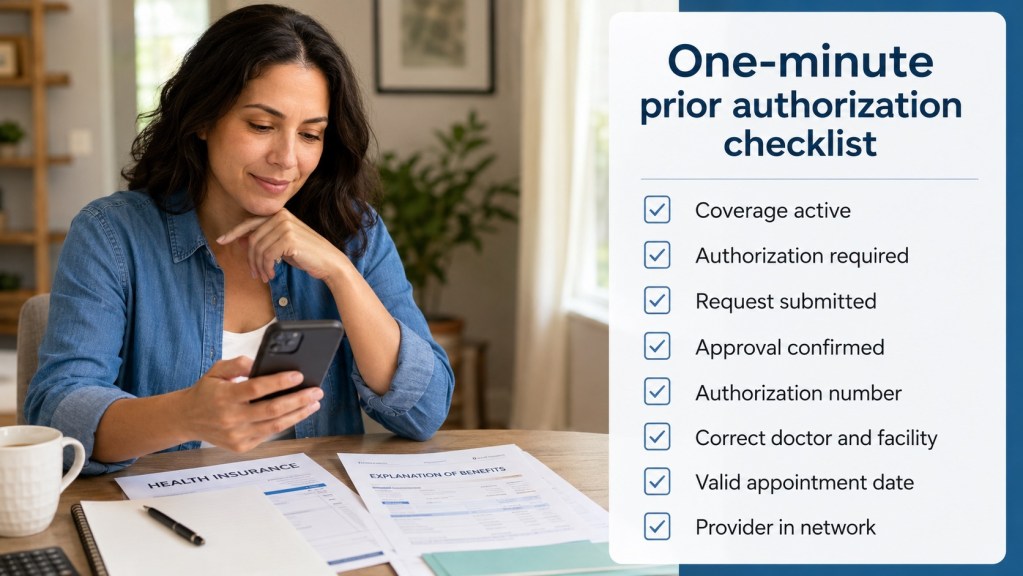
Keep a record of your calls, reference numbers, portal messages, and any letters from your provider or insurance company.
If the request is denied
Read the denial notice carefully. Look for the reason, any missing information, the deadline to respond, and the instructions for another review or appeal.
Then call your insurance company and ask:
Next, contact your doctor’s office. The provider may be able to correct patient or insurance details, send missing records, add clinical information, request a peer-to-peer review, recommend another covered treatment, or submit an appeal.
If you already received a bill
A bill does not always mean you owe the full amount. First, ask the provider for an itemized bill. Then compare it with your Explanation of Benefits from the insurance company.
The Explanation of Benefits is usually not a bill. It shows what was charged, what the insurer processed, what was denied, and what amount may be assigned to you.

Ask the billing office to pause collection activity while the issue is being reviewed. Get that agreement in writing when possible.
Some bills can be resolved after missing records are sent, coding is corrected, or the insurer reprocesses the claim.
Final reminder
Before planned care, remember this:
Confirm the authorization with both the provider and the health plan. Make sure the approval matches the service, doctor, facility, and appointment date.
A few minutes of follow-up before treatment can prevent a much bigger problem later. You should not have to become an insurance expert, but asking the right questions and keeping clear records can protect you when something goes wrong.
How RCMGen helps
RCMGen helps healthcare organizations improve the steps that happen before and after patient care.
This includes eligibility checks, prior authorization follow-up, documentation review, claim validation, denial prevention, and patient billing support.
When providers, insurers, and patients have the right information at the right time, there is less room for confusion. That can mean fewer delays, fewer preventable denials, and a better financial experience for patients.